
7 Legal and Compliance Checklists Every New Business Owner Must Know
A legal compliance checklist for new business owners is essential for avoiding penalties, ensuring smooth operations, and building a strong foundation for growth.
In India, a single missed filing, a late registration, or an incorrect corporate structure can result in heavy government penalties, legal disputes, or worse getting your business shut down. Building a secure business from day one using a proper business compliance checklist is far easier than trying to fix legal mistakes later.
Managing your statutory requirements is one of the most important aspects of starting a company. This Legal Compliance Checklist will help new business owners stay protected, maximize tax efficiencies, and remain completely compliant from day one.
This comprehensive guide covers the 7 essential corporate compliance pillars that every new business owner must cross off their list before taking off.
Table of Contents
1. Why Every New Business Needs a Legal Compliance Checklist
2. Choose the Right Business Structure
3. Register Your Business with the Required Authorities
4. Obtain GST Registration (If Applicable)
5. Open a Business Bank Account and Maintain Financial Records
6. Protect Your Business with Intellectual Property Registration
7. Comply with Labour and Employment Laws
8. Stay Updated with Annual and Ongoing Compliance Requirements
9. Common Compliance Mistakes New Business Owners Should Avoid
10. Final Thoughts
11. Frequently Asked Questions (FAQs)
1. Choosing and Registering the Right Business Structure
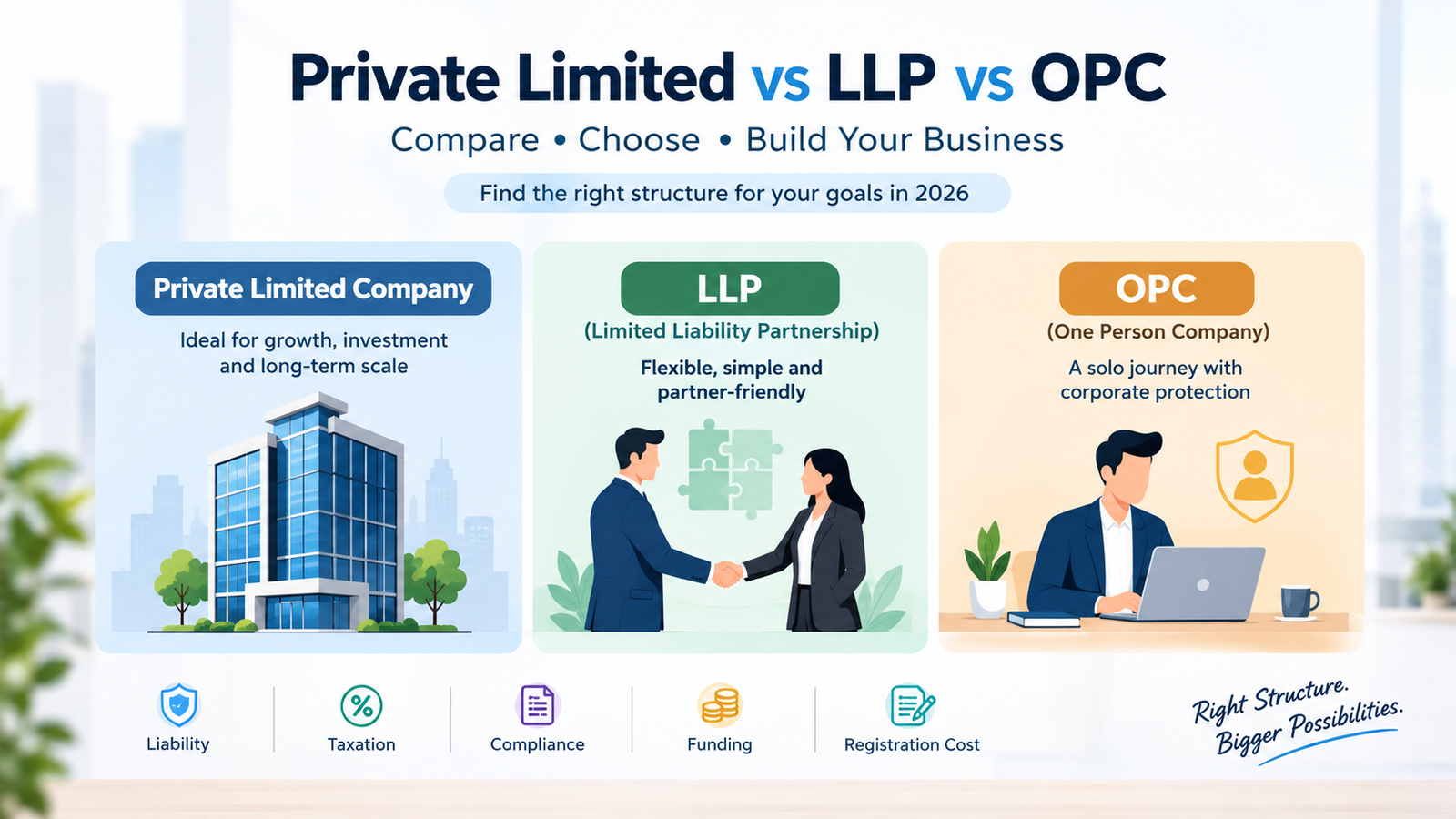
Your business structure affects everything from your daily operations to how much tax you pay, and how much of your personal assets are at risk. You must choose a structure that matches your long-term goals.
- Sole Proprietorship: Best for solo creators or small local shops. It is easy to start but offers no personal liability protection.
- Limited Liability Partnership (LLP): Ideal for professional services and small-to-medium businesses. It protects personal assets and has lower compliance costs than a company.
- Private Limited Company (Pvt Ltd): The gold standard for startups looking to raise institutional funding, venture capital, or scale globally. It provides strict liability protection and high credibility.
Action Item: Evaluate your funding needs. If you plan to pitch to investors, register as a Private Limited Company immediately.
2. Securing Core Government Registrations
Once your business entity is incorporated, you need specific government recognitions to operate legally and unlock state benefits.
- MSME / Udyam Registration: A completely free registration that classifies you as a Micro, Small, or Medium Enterprise. This grants you access to cheaper bank collateral-free loans, subsidies, and protection against delayed payments from clients.
- Shop & Establishment Act License: Mandatory if you are operating from a physical commercial space, office, or retail outlet. It regulates working hours, employee benefits, and local commercial rules.
- Startup India Recognition: If your business is innovative, registering with the DPIIT under the Startup India scheme can unlock massive tax holidays, easier compliance tracks, and government tender preferences.
3. Navigating GST and Basic Tax Registrations
Tax compliance is non-negotiable. Missing thresholds can attract immediate notices from the authorities.
- PAN and TAN: While a Private Limited Company gets a Permanent Account Number (PAN) during incorporation, you must separately apply for a Tax Deduction and Collection Account Number (TAN) if you plan to deduct TDS on salaries or vendor payments.
- GST Registration: Mandatory if your annual turnover exceeds ₹40 Lakhs for goods or ₹20 Lakhs for services (thresholds may vary slightly depending on your specific state). However, if you sell products online via e-commerce platforms, GST registration is required from day one, regardless of your sales volume.
4. Separating Personal and Business Finances
Mixing personal funds with business transactions is a major red flag for auditors and completely destroys the legal separation provided by an LLP or Company structure.
- Open a Corporate Current Account: As soon as you receive your incorporation certificate and PAN, open a dedicated commercial current account with a bank.
- Maintain Clean Capital Contribution: Ensure that your initial bootstrap capital or equity funding is officially routed from your personal account into the business current account as equity or director loans, properly documented by your accountant.

5. Protecting Your Intellectual Property (IP)
Your brand name, logo, software code, or unique product designs are valuable business assets. If you do not protect them early, a competitor can legally steal them.
- Trademark Registration: Register your brand name, slogan, and logo. A trademark ensures that no other business in your industry can use a confusingly similar name.
- Copyrights & Patents: Secure copyrights for software source code, website designs, or original written content. If you have invented a completely new machine, chemical formula, or manufacturing process, file for a patent before making it public.
6. Drafting Ironclad Employment and Labor Contracts
A business is only as good as its team, but vague employee relationships can lead to expensive lawsuits or theft of confidential trade secrets.
- Employment Agreements: Every hire must sign a formal offer letter and employment agreement that clearly defines their role, salary structure, notice period, and termination clauses.
- IP Assignment & NDA: Ensure your contracts include a Non-Disclosure Agreement (NDA) and an “Intellectual Property Assignment” clause. This ensures that any code,design, or strategy your employee creates belongs completely to your company, not to them personally.
- Provident Fund (EPF) & ESIC: Once your team grows past 20 employees, registering for the Employee Provident Fund becomes mandatory. Similarly, Employee State Insurance (ESIC) becomes essential based on salary and staff strength criteria.
7. Setting Up the Annual Compliance Calendar
Compliance is a continuous journey, not a one-time event. You need a system to track recurring filing deadlines.
- ROC Annual Filings: Private Limited companies and LLPs must file annual financial statements and solvency returns with the Registrar of Companies (ROC) every year. Skipping this can disqualify directors and result in heavy daily penalties.
- Income Tax Returns (ITR): Even if your business makes zero profit or a financial loss in its first year, filing a corporate income tax return annually is legally required.
Compliance Timeline
| Time | Compliance |
|---|---|
| Day 1 | Business registration |
| Within first month | PAN, TAN, GST (if applicable) |
| Monthly | GST returns (where applicable) |
| Quarterly | TDS returns (if applicable) |
| Annually | Income tax return, ROC filings, financial statements |
Confused About Corporate Compliance? Let Us Help!
Running and growing a business is your full-time job. Managing shifting tax codes, legal drafting, and government timelines shouldn’t have to be.
Our team of financial and legal experts helps startups set up their corporate foundations smoothly, completely error-free, and fully compliant with Indian laws.
Secure your business today. Click below to schedule a quick 15-minute introductory legal health check for your startup.
Frequently Asked Questions
What is a legal compliance checklist for a new business?
A legal compliance checklist is a structured list of statutory, tax, labor, licensing, and regulatory requirements that a new business must fulfill to operate legally and avoid penalties.
Why is legal compliance important for startups and new businesses?
Legal compliance helps businesses avoid fines, legal disputes, license cancellations, and reputational damage. It also builds trust with customers, investors, and government authorities.
What registrations are required before starting a business in India?
Depending on the business structure, registrations may include Company Registration, LLP Registration, PAN, TAN, GST Registration, Shops & Establishment Registration, and other industry-specific licenses.
Is GST registration mandatory for every new business?
GST registration is mandatory for businesses that exceed the prescribed turnover threshold or engage in interstate taxable supplies. Certain businesses may also require compulsory GST registration regardless of turnover.
What are the consequences of non-compliance for a business?
Non-compliance can result in financial penalties, legal notices, interest on unpaid taxes, suspension of licenses, and in severe cases, prosecution of business owners.
How often should a business review its compliance requirements?
Businesses should review their compliance obligations regularly, preferably every quarter, and whenever there are changes in business operations or applicable laws.
What labor law compliances should new employers follow?
Employers should comply with employee contracts, payroll regulations, provident fund requirements, employee state insurance provisions, gratuity rules, and workplace safety standards where applicable.
Are annual filings mandatory for private limited companies?
Yes. Private limited companies are generally required to file annual returns, financial statements, and other statutory documents with the relevant authorities within prescribed deadlines.
How can businesses keep track of compliance deadlines?
Businesses can use compliance calendars, accounting software, professional compliance services, or engage legal and tax consultants to monitor filing and renewal deadlines.
Should a new business hire a compliance consultant?
Hiring a compliance consultant can help ensure accurate registrations, timely filings, and adherence to changing regulations, allowing business owners to focus on growth and operations.

1 Comment
Your comment is awaiting moderation.
Feels like a real Vegas experience right from my couch. The atmosphere at davegascasino is top notch.
Your comment is awaiting moderation.
The mobile experience is hands down the smoothest I have come across. Navigation is intuitive and I can switch between slots and live casinos without any lag. Customer care even follows up after a big win to make sure everything is on track. Truly a player first platform. vnq815
Your comment is awaiting moderation.
[…] Legal compliance […]
[…] regulations, filing procedures, and compliance requirements may change over time. Businesses should regularly review official updates to ensure […]